Organisation slams MTBPS as ‘anti-poor’: Here’s why
· Citizen
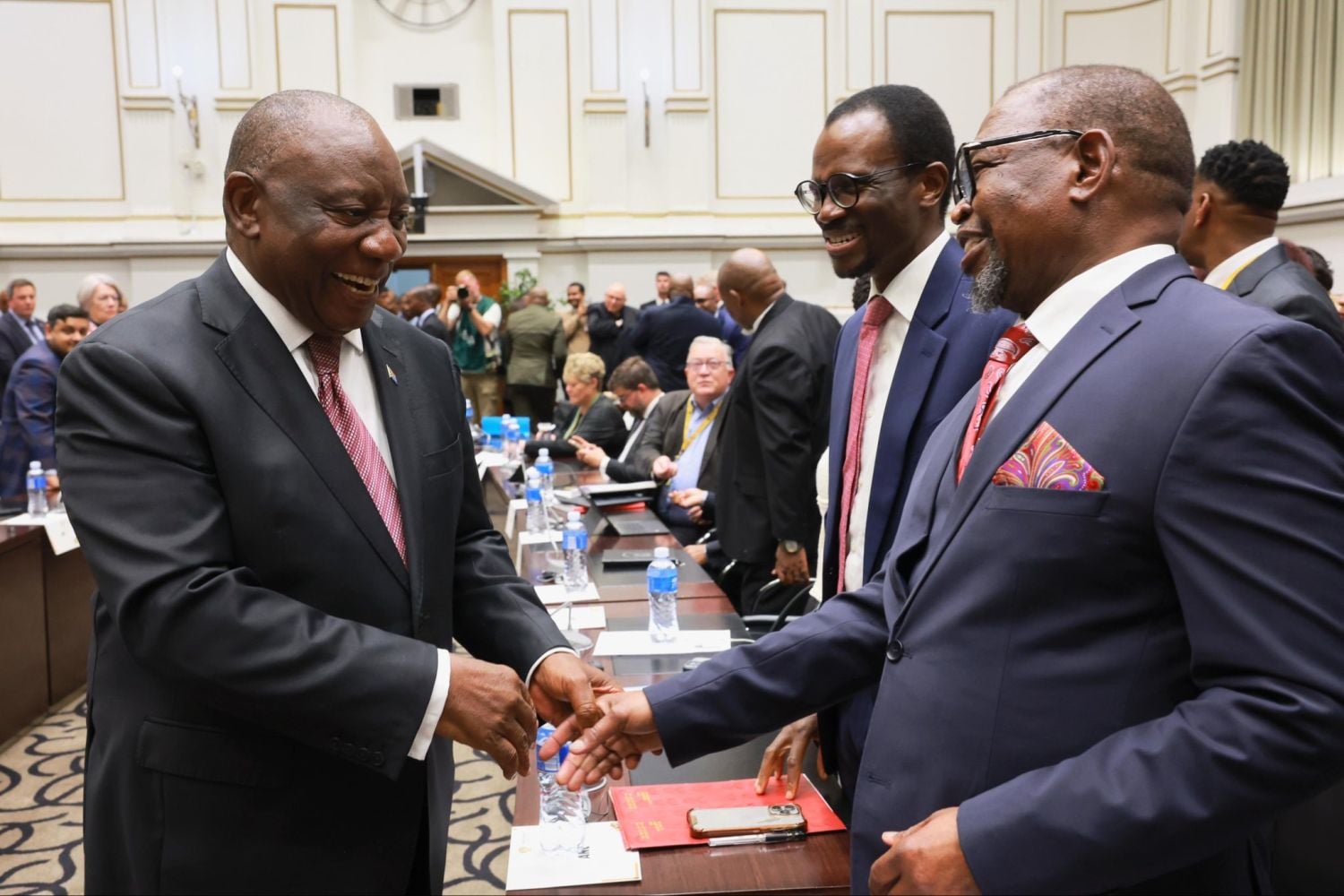
Fair Play Movement has slammed the Finance minister Enoch Godongwana’s medium-term budget policy statement (MBPTS) as anti-poor, citing that the government has once again failed to prioritise struggling households.
Visit betsport.cv for more information.
Godongwana’s MBPTS delivered on Wednesday, 21 October, has received different reactions. Some have welcomed it with optimism, while some are unhappy with what the minister tabled. Fair Play is on the latter side.
The Fair Play Movement is a not-for-profit advocacy organisation founded in October 2016, and it campaigns against predatory and illegal trade practices, specifically the “dumping” of foreign goods, selling products in South Africa at prices lower than their cost of production in home markets.
Did the MTBPS speak to the poor?
Fair Play’s founder, Francois Baird, has expressed dissatisfaction that the government has once again ignored the call to include chicken portions on the list of foods exempt from value-added tax (VAT).
“For the eighth year in a row, South Africa’s government has failed to implement a simple, pro-poor measure – exempt from VAT the chicken portions most consumed by low-income households,” he said.
“Godongwana had the opportunity once again in today’s medium-term budget. Once again, he failed to take it. He has rejected a move which has the support of all political parties, as well as President Ramaphosa. He has done so at a time when the move is affordable. And he has turned away from an initiative that would have stimulated growth and jobs.”
VAT-free chicken plea ignored in the MTBPS
The Fair Play Movement was one of the organisations fighting to have chicken portions included on the list of foods exempt from VAT when the list was expanded in 2025. However, the organisations’ pleas fell on deaf ears.
They argued that low-income households consume most chicken portions and that chicken is the cheapest source of protein.
“Fair Play welcomes the R1.6 billion that will go to child nutrition to help reduce South Africa’s horrific rate of child stunting, which is caused by malnutrition,” said Baird
“However, he has ignored the contribution that VAT-free chicken would make to vulnerable families with malnourished children. Now millions of poor South Africans will continue to pay an extra 15% on every chicken portion that they buy, and on every pack of chicken liver.”
Plea for Godongwana to reconsider
Baird asks the minister to reconsider adding chicken portions to the list of foods exempt from VAT.
“Hunger, poverty and unemployment have increased every year since 2018, when the government first refused to opt for VAT-free chicken. Petrol and diesel prices are rising inexorably, and will drive up food inflation. Hunger levels will go up further.
“It is a situation crying out for a quick and easy step to make food more affordable.
“We appeal to Minister Godongwana to reconsider. Drop VAT on chicken, and prices will drop immediately. Millions of poor people will thank you,” said Baird.
Not the first time
This is not the first time the government has been criticised for being anti-poor on relief. Earlier in the year, Godongwana announced a temporary suspension of the fuel levy on petrol and diesel, but said nothing about paraffin, which did not land well.
The Motor Industry Staff Association (Misa) was one of the organisations pleading with the minister to extend relief for vulnerable households. Paraffin prices are treated like petrol and diesel, influenced by a combination of international market forces, currency values, and local distribution dynamics.
Martlé Keyter, Misa CEO of operations, said paraffin remains the primary energy source for many people in the country, and its high price will only make things worse for already struggling families.
Delivering his MTBPS, Godongwana did it again; he offered relief to motorists but not to paraffin users. For October 2026, the wholesale price of illuminating paraffin is R27.27 per litre inland and R23.41 per litre in coastal areas.
Relief welcomed
Senior Research Analyst at Nedbank, Reezwana Sumad, welcomed the relief, citing that the fuel price relief will be felt at the household level. She was speaking during a webinar hosted by the North-West University (NWU) Business School on Thursday.
“Oil prices remain elevated; the rand has been fairly stable. Oil is well over $100 a barrel, and that is the crux of the reason why fuel prices have escalated in the last six months,” she said.
“The fuel price relief will be felt at the household level, as well as across businesses. In the logistics space, businesses that are diesel-intensive should find some relief in November with a slightly lower diesel price.
“Inflation forecasts for November and December it’s slightly lower because of the relief, but for the full year, it means that previously we were anticipating inflation at 4.4%, it’s likely to be 4.3% now. It also means that the South African Reserve Bank (Sarb) can hold off on hiking interest rates to assess how inflation evolves and how the oil price evolves.”