China’s 'Salami Slicing' Along Arunachal Border Could Risk Conflict, JNU Professor Warns
· Free Press Journal
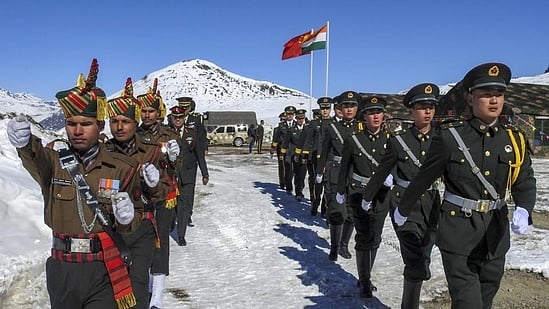
Chinese Studies expert at Jawaharlal Nehru University (JNU), Professor Srikanth Kondapalli, on Saturday called China’s strategy along the Arunachal Pradesh border “salami slicing”, warning that the continued deployment of troops and offensive weapon systems near the Line of Actual Control (LAC) could increase the risk of a future conflict between India and China.
Speaking to ANI, Kondapalli said border transgressions were a recurring feature of the India-China frontier, with incidents taking place even when both countries maintained that stability prevailed along the LAC.
Visit chinesewhispers.club for more information.
‘300 To 400 Transgressions’ Reported Along LAC Annually
“It is a very serious issue in terms of the transgressions on the border. Generally, we have 300 to 400 transgressions on the border, the Line of Actual Control. So, this is not a one-off event. This happens regularly, even when both sides say they have stability on the border,” Kondapalli said.
#WATCH | Delhi | On ITBP DG's statement, Chinese Studies Expert at JNU, Professor Srikanth Kondapalli says, "It is a very serious issue in terms of transgressions on the border... This happens regularly, even when both sides say they have stability on the border. The number of… pic.twitter.com/UvAB6SnMO1
— ANI (@ANI) October 24, 2026
He added that the number of transgressions varied between 380 and 430 annually, amounting to almost one incident a day. According to him, such incidents could be either intentional, involving attempts to assert territorial claims, or unintentional, resulting from difficult terrain and harsh weather conditions in high-altitude areas.
Kondapalli said deliberate transgressions were particularly concerning when either side attempted to expand its perceived claim area, potentially triggering confrontations between patrols.
“The Chinese are moving in with the salami slicing,” he said, referring to what he described as incremental advances into areas claimed by India.
Professor Flags Lungchu, Takshing And Other Sensitive Areas
He pointed to the Lungchu area in Arunachal Pradesh's Upper Subansiri district, where he alleged that Chinese activity had extended into Indian-claimed regions over several decades. He also referred to the Takshing area and other sensitive locations along the eastern sector of the LAC, where local-level confrontations and restrictions on movement have raised concerns.
Kondapalli identified several areas across the eastern, middle and western sectors where transgressions reportedly occur frequently. These include Asaphila, Lungchu, Namka Chu, Sumdorong Chu and Yangtse in the eastern sector, along with Barahoti in the middle sector and Pangong Tso and Demchok in Ladakh.
The professor said such incidents could remain limited to local-level confrontations but warned that they could escalate if patrols from both sides attempted to enforce competing territorial claims.
He cited the Galwan Valley clash of June 2020, in which 20 Indian soldiers were killed, as an example of how tensions along the border could develop into a major confrontation.
“Any of these transgressions can happen-intentional, unintentional,” he said, explaining that the consequences could range from a routine encounter resolved through established protocols to a serious military clash.
Incomplete De-Escalation And De-Induction Remain Concerns
Kondapalli also raised concerns over the incomplete de-escalation and de-induction process along the LAC, despite disengagement arrangements and high-level diplomatic engagements between New Delhi and Beijing.
He referred to the October 2024 disengagement and patrolling arrangement, saying the two sides had announced disengagement but had not announced complete de-escalation and de-induction.
Explaining the distinction, he said disengagement involved moving troops away from face-to-face positions, while de-escalation required withdrawing offensive weapon systems deployed close to each other. De-induction, meanwhile, involved gradually withdrawing troops from high-altitude areas and returning them to lower elevations for training and rotation.
“Even after the Kazan meeting, and even after Prime Minister Modi and President Xi Jinping met on September 12th, it is still the same story. The offensive weapon systems are still close by, which means at any moment, there could be a problem between the two sides,” Kondapalli said.
The reference was to the leaders' meeting in September, which followed a period of efforts to stabilise bilateral relations and address outstanding border issues. Kondapalli argued that high-level political engagement had not, by itself, resolved the military challenges on the ground.
He said the continued presence of troops and offensive weapons near the LAC meant that the possibility of confrontation could not be ruled out, particularly in areas where the boundary remained undefined and both sides maintained differing perceptions of the border.
ITBP First Responders In Border Confrontations, Says Kondapalli
The professor also highlighted differences in the roles of India's diplomatic and frontline security establishments. He said the Ministry of External Affairs generally used diplomatic language to protect bilateral relations, whereas the Indo-Tibetan Border Police (ITBP), operating under the Ministry of Home Affairs, dealt directly with developments on the ground.
“The ITBP will have to face the situation on the ground, and so they are the first responders,” he said, adding that the Army could become involved if frontline forces were unable to manage a situation.
His remarks come amid renewed political debate following reports of continuing face-offs involving Chinese forces in Arunachal Pradesh. The Ministry of External Affairs has said that the situation along the India-China border can be disturbed when Chinese forces diverge from established patrolling patterns, while emphasising that both countries continue to use diplomatic and military mechanisms to resolve outstanding issues and prevent misunderstandings.
Who Are ITBP Shaurya Commandos? Inside The Elite Force Praised By Shatrujeet Kapur For Guarding India-China BorderIndia, China Reaffirm Commitment To Border Peace
At the 25th round of Special Representatives' talks on the boundary question, held in Beijing on August 25, India and China reaffirmed their commitment to maintaining peace and tranquillity along the border. Both sides also agreed to address developments on the ground through existing diplomatic and military channels.
Kondapalli said the undefined nature of the LAC remained a fundamental challenge and that defining, delimiting and demarcating the boundary would be a lengthy process.
He cautioned that although recent incidents had not necessarily led to large-scale confrontations, repeated transgressions and continued military deployments could create the conditions for future escalation, with wider consequences for India-China relations.
(Except for the headline, this article has not been edited by FPJ's editorial team and is auto-generated from an agency feed.)