RFK Jr. Institutes Backdoor Approval of 6 Peptides
· Reason
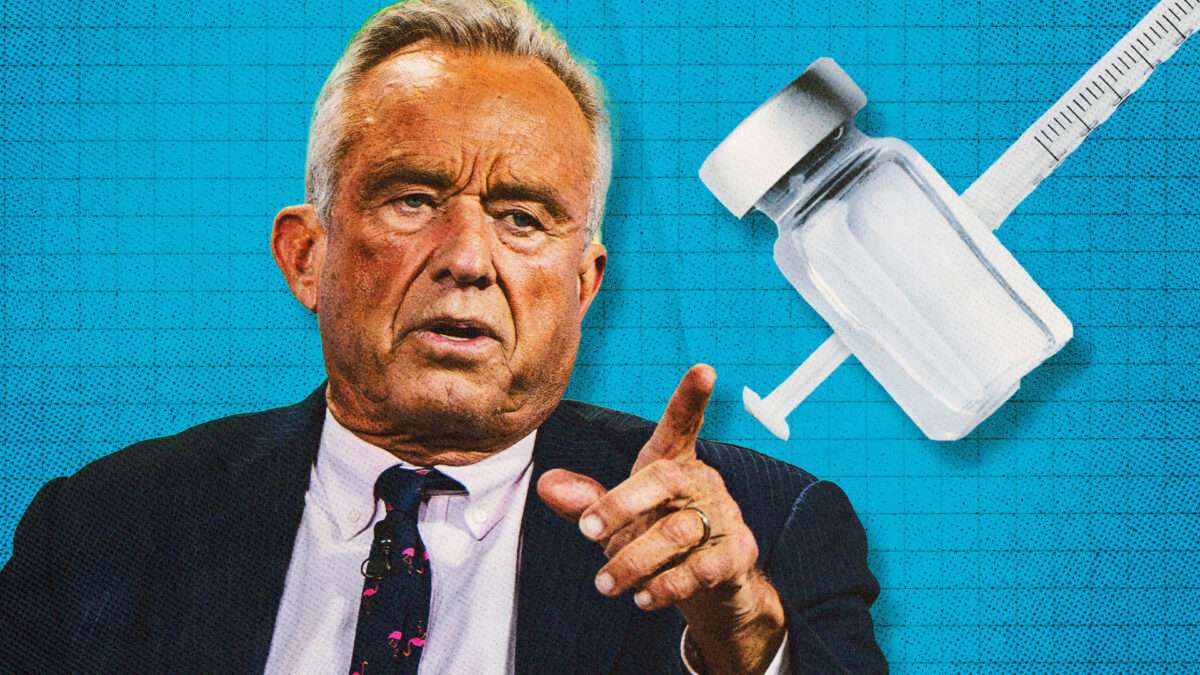
The Department of Health and Human Services (HHS) will let pharmacies produce and sell treatments involving six peptides that aren't specifically approved by the Food and Drug Administration (FDA). The move is meant to provide a "controlled alternative" to buying peptides from possibly sketchy foreign pharmacies, HHS said.
Visit syntagm.co.za for more information.
Under the new HHS policy, the agency will not "take enforcement action against a State-licensed pharmacy, Federal facility, or licensed physician compounding a drug product" using one of six named "peptide bulk drug substance[s]."
This is a major win for peptide proponents, compounding pharmacies, and health freedom—and hints that HHS Secretary Robert F. Kennedy Jr. may be feeling frustration with the slow pace of things at the FDA.
The six peptides in question—BPC-157, Epitalon, KPV, MOTS-c, Semax, and TB-500—were the subject of a summer meeting of the FDA's Pharmacy Compounding Advisory Committee (PCAC).
Up for debate was whether these six "bulk drug substances" and another, Emideltide, should be put on the FDA's Section 503A Bulks List. That list governs which substances licensed physicians and specialty pharmacies can compound into drug products without them being a component of an already FDA-approved drug or having "an applicable United States Pharmacopeia (USP) or National Formulary (NF) monograph."
In July, the panel voted to put six of the seven peptide-related substances under consideration (all except Emideltide) on the bulks list. But the panel's vote is not binding.
It's ultimately up to FDA authorities to decide whether they accept the advisory committee's recommendations. So far, no decision has been released.
But yesterday, HHS unveiled an "Enforcement Discretion Policy Regarding 503A Compounding Using Certain Peptide Bulk Drug Substances." And it effectively puts the committee's recommendations into practice by proxy.
Kennedy can't ensure FDA approval, of course. But he can—and will—stop HHS from taking action against physicians or pharmacies that compound and distribute these substances under his prescribed rules.
In an explainer about the new policy, HHS notes that "compounded drugs are not FDA-approved, which means FDA does not review their safety, effectiveness, or quality before they are marketed." Nonetheless, "compounded drugs can serve an important medical need for certain patients" and "there is significant interest in the use of these peptides in compounding," it says.
Opponents of allowing more peptide-based treatments to be compounded by licensed U.S. pharmacies often focus on the fact that these products don't have FDA approval and may not have the extensive experimental backing required of FDA-approved treatments.
But people are already taking BPC-157, MOTS-c, and other peptides anyway, buying them from companies selling them under "for research use only" labels or obtaining them from foreign distributors. Peptides can even be found on discount everything-marketplaces like the China-based AliExpress.
Allowing licensed physicians and pharmacies in the U.S. to compound these substances without fear of being punished gives people access to safer options than they might otherwise have.
Pharmacies compounding peptide-based products under the rules set forth by federal law still have to be licensed in the states where they operate and follow certain rules, including a requirement that active ingredients used for compounding must be "accompanied by valid certificates of analysis" and "be compounded based on the receipt of a valid patient-specific prescription." Per the new HHS policy, they must also follow several other rules regarding the packaging and labeling of these peptides.
"The Secretary of HHS has determined that this limited enforcement-discretion policy will discourage the continued, widespread use of certain research-use-only peptides supplied by foreign manufacturers that pose a safety risk to US patients," notes the HHS explainer. "By allowing limited compounding of the substances addressed in this guidance under appropriate safeguards, the policy provides patients with a more controlled alternative."
It's an astoundingly reality-based policy for government health officials, who often act as if matters like this come down to a binary between perfect health and safety on one hand and certain danger on the other.
Rather than relegating peptides to gray or black markets until they (may be) pronounced all clear by the FDA, RFK Jr.'s HHS has chosen to balance safety with "patient choice and freedom," as the HHS states.
The post RFK Jr. Institutes Backdoor Approval of 6 Peptides appeared first on Reason Magazine.