How Did Nathan Fielder Pull This Off?
· The Atlantic
Sign up for Video Village, a new weekly newsletter in which David Sims unearths cinematic gems and brings readers into his movie obsession.
Visit newsbetting.club for more information.
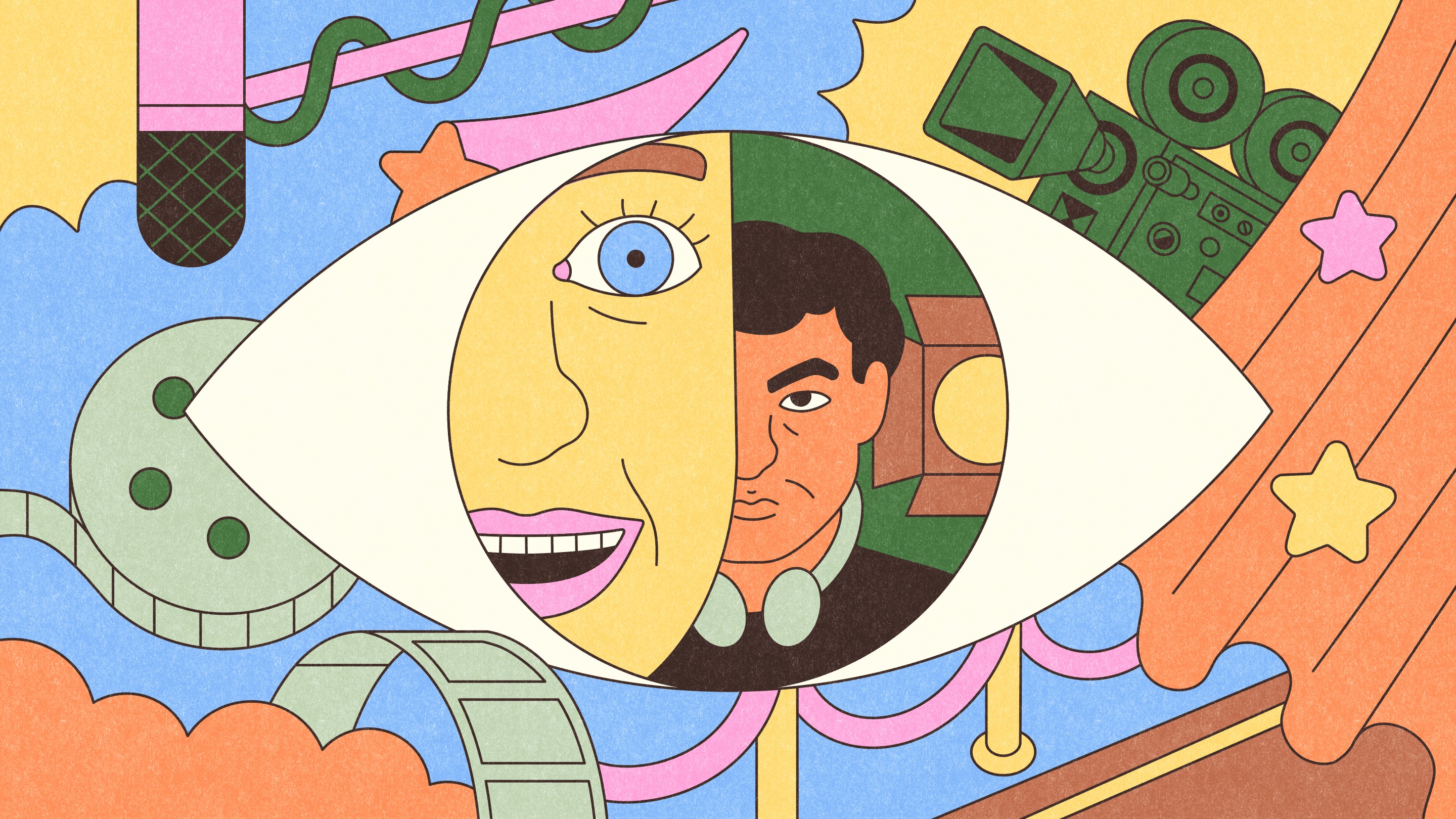
Sometimes simply stating a fact helps to underline just how unusual it sounds. Last weekend, the biggest movie in America was a nearly three-hour documentary. Yes, You Can See Everything is a special kind of film, featuring a “star,” of sorts, in the comedian Nathan Fielder and a notorious public figure as its subject in Elizabeth Holmes. But there’s no need to really split hairs on this. To make a documentary the must-see release of the fall is a stunning achievement—for Fielder; for his co-director, Lance Oppenheim; and for the distributor, A24.
You Can See Everything’s $11.4 million haul over Halloween weekend helped it climb to No. 1, dethroning the DC Comics adaptation Clayface; in the three weeks since its release, it has earned some $64 million and counting. That makes it one of the highest-grossing documentaries of all time, behind only some museum-friendly nature features; concert films by Michael Jackson, Justin Bieber, and Taylor Swift; and Michael Moore’s Fahrenheit 9/11. (In the case of the latter, which earned more than $200 million worldwide: Talk about another distinct cultural moment.) Fielder made a name for himself on cable TV; he first won acclaim with the Comedy Central series Nathan for You. But he followed that up with more avant-garde works, namely The Curse (on Showtime) and HBO’s The Rehearsal. Moving from those to mainstream movie stardom would be a difficult step for most; Fielder has done it while retaining his deadpan on-screen personality.
Fielder’s name brand aside, his documentary’s unusual success can’t be attributed to one particular thing. The continued public interest in the Elizabeth Holmes case certainly helps. The story of her failed company, Theranos, is an ongoing topic of fascination, despite not producing much news in recent years; the 2022 Hulu miniseries The Dropout boosted its visibility. You Can See Everything’s rave reviews, of course, also matter a lot—as much as industry folk occasionally love to claim that film criticism has gone extinct, discourse can help draw attention to more commercially risky projects like this one.
A24, which often does an excellent job conceiving its projects’ publicity campaigns, also came up with an unusually good release strategy for the documentary. You Can See Everything’s premiere was a genuine surprise at the Telluride Film Festival—although I had heard plenty of chatter that something was going to screen there last-minute, the company really kept all the details locked down. Even after the cat was out of the bag, the buzz around the documentary remained mystical and secretive, with hints that it had a major “twist.” Spoilers abound for those who haven’t seen it yet: The actor Amanda Seyfried appears in the movie’s latter half, brought in by the co-directors because of her experience playing Holmes in The Dropout. She not only reprises her performance, but also functions as both an audience surrogate and a fresh pair of eyes on Fielder’s relationship with the disgraced biotech entrepreneur; together, they puzzle out the extent to which he might have been manipulated.
Essentially, A24 (and Fielder and Oppenheim) managed to turn a documentary into a narrative event. It feels like a scripted film, with a protagonist who experiences a complex arc—a rare achievement for the form. Its success, which has given birth to numerous think pieces, memes, and Halloween costumes, is bound to breathe new life into a somewhat commercially moribund medium. The last wave of theatrically released nonfiction sensations came in the late 2010s, led by (smaller-size) box-office hits such as Won’t You Be My Neighbor? and RBG. By and large, breakout entries have focused on either celebrities or true-crime cases. Many of the biggest releases are now relegated to streaming; Netflix, in particular, has become a real powerhouse in the genre. Following the coronavirus pandemic, fewer and fewer documentaries have received theatrical rollouts, and the market for them at film festivals has slumped.
A rebound, however, seems likely. Other well-received nonfiction movies are circulating in theaters: John Wilson’s brilliant The History of Concrete, a feature-length version of the wry stylistic schtick he presented in his HBO show, sold out screens in New York City its opening weekend. Naza, Yuval Abraham and Rachel Szor’s searing follow-up to the Oscar-winning No Other Land, has been doing similarly robust business in indie cinemas; news reports that the Israeli government is looking to revoke the filmmakers’ citizenship (for interviewing IDF members about carrying out alleged war crimes) have likely contributed to growing interest. Alex Gibney’s sprawling Musk has also made headlines for the way it allegedly earned the ire of its subject, although the doc will likely perform better on streaming, given its four-hour runtime.
You Can See Everything, however, has transcended the art-house market that these other movies are playing in. Its performance also might be difficult for Hollywood to copy. Consider the staggering sensation Backrooms (another A24 film), which prompted studios to acquire other bits of YouTube horror in order to try to imitate its appeal for Gen Z viewers. Producers may struggle to find successors that replicate the weird alchemy of Fielder and Oppenheim’s project, which combined an alluring focus with their very specific, funny perspective. If this box-office smash just turns out to be a black-swan event for documentary filmmaking, it will be a fascinating one to remember—and either way, You Can See Everything’s success proves that audiences are interested in a broader set of theatrical fare than just superhero-heavy lineups.
An Essay I Enjoyed
Alisa Gao / The AtlanticWhen a Movie Hinges on a Kid’s Performance
By Shirley Li
Josephine is anchored by Mason Reeves, the actor who plays Josephine, who was 8 at the time of filming. Her performance sensitively conveys her character’s mixture of confusion, frustration, fear, and curiosity. Reeves is now 10, and she’s been enthusiastic, Beth Araújo told me, about acting in another project soon. Araújo would rather she didn’t. “I hope and I believe Mason had a great experience on this,” she told me in September, “and I hope she also puts it aside for a while.”
Coming Attractions
Oscar season is really about to kick off. November is when the slow rollout of high-profile releases start choking movie theaters, typically first in a few locations in New York and Los Angeles. But Martin McDonagh’s Wild Horse Nine will make a bigger debut this Friday ahead of a major Oscar campaign. If you enjoy McDonagh’s acidic brand of dramedy, this film will work for you—it’s witty, mordant, and cynical, with delightful cursing variants and extremely well-acted performances by its two leads, John Malkovich and Sam Rockwell. It follows two jaded CIA operatives (Malkovich and Rockwell) vacationing on Easter Island, shortly before the 1973 coup d’etat that brought Pinochet to power in Chile; the shaggy moral quality recalls McDonagh’s best film, In Bruges, in which a pair of lost souls wrestle (humorously) with the limits of their villainy. Malkovich is doing especially soulful work that may earn him an Oscar. But my overall opinion on Wild Horse Nine is firmly “good, not great”; it’s a bit of a retread after the heights of McDonagh’s previous movie, the excellent The Banshees of Inisherin.
Another prestige-y newcomer is Godzilla Minus Zero, the follow-up to the critically acclaimed, Oscar-winning Godzilla Minus One. Explaining the many strands of Godzilla is hard: The character has appeared in films for several decades and across multiple continuities, including an extant (and successful) American offshoot that will receive another entry next year. (In that sequel, Godzilla once again does battle alongside King Kong.) But Minus Zero, directed by Takashi Yamazaki, furthers the rebooted myth from Minus One, which laid out a more grounded narrative for the legendary kaiju. Both are period pieces that recontextualize Godzilla as a monster that emerges in the aftermath of World War II and subsequent nuclear testing, echoing the character’s ’50s origins. Minus Zero effectively ups the disaster scale and looks incredible; if you liked Minus One, as I did, you’ll certainly like this one too.
What Else I’m Watching
-
October was horror month, and I love to tackle franchises I have never fully filled in. This year I took on The Ring, watching all four of the original Japanese films (assembled in a lovely box set by the distributor Arrow Video), including the bizarre and forgotten side-sequel Spiral. Then I tackled Gore Verbinski’s stunning American remake of the first film; the truly bizarre The Ring Two (directed by Hideo Nakata, who made the original Japanese Ringu); and the reprehensibly bad reboot Rings. Nothing more fun than riding the ups and downs of a horror series!
- I’d also like to shout out a couple other 2026 horror hits that readers emailed to me in response to last week’s newsletter. Craig H. recommended the creature-feature crime drama The Cycle (on Shudder now), which has been burning a hole in my watch list. Brendan M. shouted out Faces of Death (also on Shudder), an update of a trashy ’70s cult movie that I thought was clever, if not too scary. Send more of your picks!