The Broken Promise of a Home in Spain
· Time
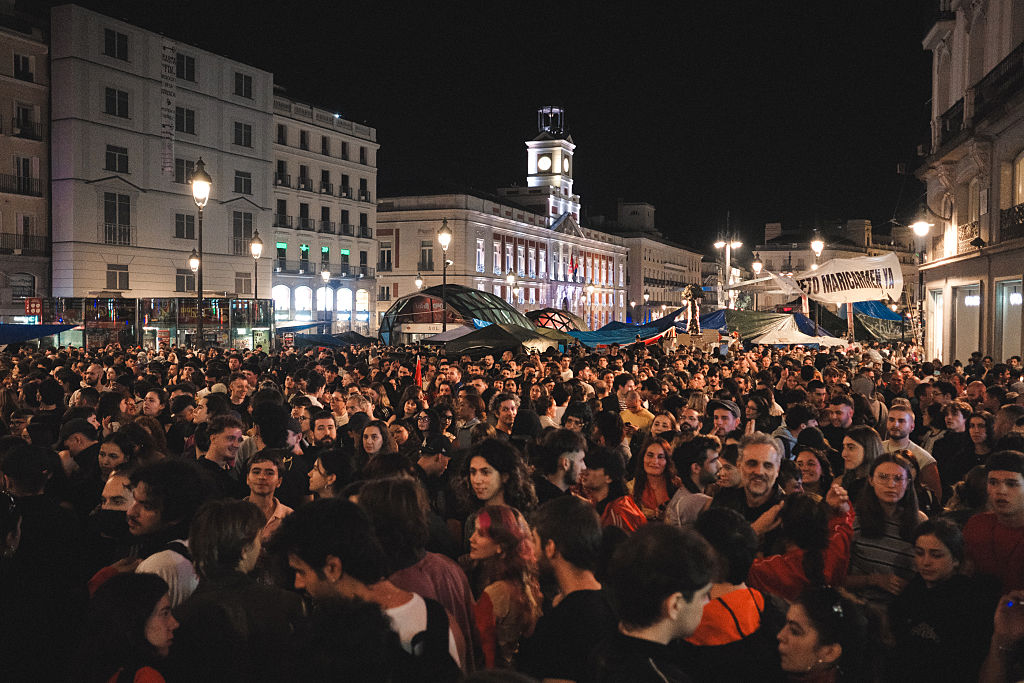
Few aspirations are as modest, and as widely shared, as the wish to die at home, surrounded by one’s own people and by the objects and walls in which a whole life has been stored. Perhaps that’s why the death of 87-year-old Maricarmen Abascal in a Madrid hospital—14 days after she was removed on a stretcher from the apartment where she had lived since she was 17—has deeply moved a country that has long suspected that this aspiration is a thing of the past.
On the morning of Sept. 23, Maricarmen was carried out of her apartment in the desirable Ibiza neighborhood near El Retiro park and Madrid’s city center, while hundreds of neighbors and activists tried to block her eviction at the building’s entrance. That same week, her name echoed throughout the Puerta del Sol, a landmark square in the heart of Madrid, where thousands protested, raising the slogan: ¡Ni una Maricarmen más! (Not one more Maricarmen!)
Visit mchezo.co.za for more information.
Prime Minister Pedro Sánchez’s government hastily approved two decrees to halt evictions of vulnerable people, only to see Congress, the lower house of Spain’s parliament, vote them down. The opposition came from right-wing and far-right parties, including from the Catalan pro-independence party Junts, whose support had helped Sánchez take office in 2023. This time, Junts withheld its support, citing the interests of small property owners. Three days after the vote, Sánchez dissolved the parliament and called a general election on Nov. 29.
It is rare for a European government to fall over housing. Governments are more often toppled by corruption, budget disputes, debt, or war. The Sánchez Administration had held together despite its precarious parliamentary majority and a divisive, controversial amnesty for Catalan separatist leaders who attempted secession in 2017, the price of securing the support it needed to take office. Now it has crumbled, at least in part, over something long endured in private, as a source of shame rather than a political question: where and how people live.
A home of your own
Housing has not single-handedly brought down the Spanish government, already beleaguered by corruption scandals in its inner circle and the migration crisis in Ceuta. Nor has housing merely served as a rallying cry ahead of a contentious election. Rather, it has brought these issues to a head, a pattern we are witnessing across the developed world, where housing has become a major source of inequality.
Take New York, where democratic socialist Zohran Mamdani was elected mayor on a promise to freeze rents; or Berlin, where the left-wing party Die Linke, campaigning on housing, came first in September’s state election. This raises the question: What does the question of housing reveal about Spain that gives it the charge to bring down a government? To answer that, we must return to the entranceway of that building in Madrid’s Ibiza neighborhood.
Maricarmen had lived in the apartment since the mid-1950s, when her father signed a lease that later passed down to her mother and, upon her mother’s death in 2005, to her. In 2018, the real estate company that owned the building offered to sell her the apartment for about €250,000 ($280,829), an unaffordable sum for a pensioner. In the same year, Urbagestión Desarrollo e Inversión S.L., another real estate company, purchased the apartment. In 2020, the company sued to evict her, arguing that under Spain’s tenancy law, Maricarmen’s right to extend the lease lasted only two years after her mother’s death in 2005 and should be terminated unless she qualified for a disability exception. Urbagestión, the new owners, demanded a rent that exceeded her pension of about €1,400 ($1,573). The courts ruled in favor of the property owners.
Maricarmen was not poor by conventional measures, yet her entire life hinged on a decision made by others—the people who set the price of her home. Like millions of other Spaniards who do not appear in any poverty statistics, she had enough to get by but not enough to withstand an increase in an essential expense. For some, it is rent that already consumes a large share of their wages; for others, it is electricity and heating bills in winter or the price of fuel they need to drive to work. For Maricarmen, it was the cost of remaining in the home where she had lived for 70 years. These expenses are not optional: housing, heating, and transportation are basic needs.
This malaise is masked by headline figures of a strong economy. Spain’s economy grew at twice the rate of the eurozone average in 2025, yet one in four people remains at risk of poverty or social exclusion. Maricarmen’s situation was not an anomaly but an extreme manifestation of a reality shared by millions who do not consider themselves poor yet have no financial cushion against a single unaffordable rate increase.
This vulnerability is a question of power, the power of those who set the price of a home others cannot afford to lose without also losing themselves. It is also a question of political responsibility: those with the ability to set limits have chosen not to. A home is not merely a place to sleep; it is a repository of memory, a source of autonomy, an expression of identity. It is the way the closets are arranged in an order no one else understands, the shelf that still holds the belongings of a departed loved one, the ease of finding every object with one’s eyes closed. This intimate order is shattered when someone is abruptly torn from their home, especially at the age of 87.
For Maricarmen
Maricarmen arrived at the apartment in the Ibiza neighborhood as a 17-year-old girl and left as an 87-year-old woman, on a stretcher, unable to take her belongings with her. She carried a history that no property registry could ever record: who had lived in that building, what the neighborhood was like before the investors arrived, which families had gradually moved away.
The paradox is that none of the political, judicial, or administrative bodies that could have prevented the eviction had acted illegally. With responsibility so widely dispersed, the eviction could be framed as a misfortune for which no one in particular is to blame. The philosopher Judith Shklar warned that the boundary between misfortune and injustice is not fixed; it depends on what a society is willing to prevent or alleviate. What might once have been accepted as a misfortune—an epidemic or a famine—becomes a systemic injustice when the means to prevent it are available but untapped.
Maricarmen’s eviction had been anticipated a year in advance. The authorities had received a proposal to buy or expropriate the apartment. Yet, when the case finally made headlines, it took a mere six days for the property owner to agree to let her return at an affordable rent. But Maricarmen died in the hospital. The philosopher Shklar would have called this “passive injustice”—the kind committed by those who could prevent harm but simply let it happen. She argued that institutions cannot be the sole arbiters of injustice, because they tend to label the suffering they do not wish to take responsibility for as merely “unfortunate.” This is precisely what thousands of people refused to accept when they occupied the Puerta del Sol.
The Puerta del Sol is the heart of Madrid, the Kilometer Zero of Spain’s road network. It is also where, in 2011, in the aftermath of the 2008 financial crash and amid the austerity measures imposed across the eurozone, thousands of young people camped out for weeks as part of the Indignados movement, known as 15-M, which fundamentally transformed Spanish politics over the following decade. Something similar happened on the night protesters filled the square for Maricarmen: hundreds decided to pitch their tents instead of going home. That makeshift city, with its assemblies and shifts dedicated to mutual care, returned a question to the public debate that institutions had considered settled: who is accountable for what happened to Maricarmen? The protests have turned what had been portrayed as the private misfortune of a single woman into a matter of collective responsibility.
What happened in the wake of Maricarmen’s eviction and death mirrors the anti-austerity movement of 15 years ago, whose legacy is often measured by the electoral fortunes of the new parties it helped bring into being, parties that have, since then, all but vanished. But the legacy of the 15-M movement, which inspired Occupy Wall Street and was dubbed the “Spanish Revolution” by the international press, was, above all, a shift in perspective that enabled families that lost their homes due to mortgage defaults to begin to consider their experience as a shared injustice rather than a personal failure.
After Maricarmen’s eviction, that understanding returned to the Puerta del Sol, but centered on a different question. In 2011, the concern was whether people could find work; today, the problem is that even with a job, salaries are no longer sufficient to build an independent adult life: to afford a home of one’s own, to find time to raise children, to have the certainty of remaining in the place where one has put down roots. It is hardly surprising, then, that young people of Spain, who were children when the first Puerta del Sol encampment took place, rallied around an 87-year-old woman. Maricarmen’s example refutes the narrative that pits older property owners, who benefitted from an era of cheaper housing, against the young tenants who foot the bill. Maricarmen was an elderly woman who rented her home.
This movement exposed a divide that cuts across generations: between those who own a home and those who depend on the permission of others to remain in theirs. Young people who cannot afford to move out of their family homes found common ground with an elderly woman who faced eviction, bookending lives at either end of adulthood marked by the absence of the security that Spain and Europe had promised.
Spain’s broken promise
For half a century, from the creation of the Ministry of Housing under Generalissimo Francisco Franco in 1957 until the 2008 financial crisis, Spain rested on a single promise: that work would eventually translate into home ownership, and that a home would shield families from illness, unemployment, or the vulnerabilities of old age the state could not guarantee against.
Home ownership was not merely a cultural preference among Spaniards but a deliberate political project of the Franco regime, designed to foster stable, depoliticized families with too much to lose to seek change. By the late 1950s, the regime was able to frame renting as a necessary evil tolerated only for transients or the destitute, while championing home ownership as the only way to secure order and harmony for families.
Underlying this Francoist promise was a particular conception of belonging, in which protection stemmed not from citizenship but from property ownership. In Northern European countries, individuals were protected against illness or vagaries of old age by virtue of their citizenship. In Spain, such protection depended primarily on owning a home. Housing thus became a foundation of the political order: it was a means of privatizing security, of conferring the protections that were provided by the democratic state elsewhere in Europe to individual families and their homes. Ultimately, those unable to acquire a home were not only materially disadvantaged, but they were also denied full membership in this vision of the nation, excluded from this national understanding of belonging.
Spain’s democratic governments inherited this model and, far from dismantling it, entrenched it. Administrations of various political stripes undermined the rental sector, subsidized home purchases for decades through tax breaks, opened land to development, and allowed the limited stock of subsidized housing to repeatedly end up on the open market—an astonishing process of privatization by the back door. All this unfolded despite a very different promise enshrined in the 1978 Constitution: decent housing for all, with regulated land use to prevent speculation. That constitutional promise never shaped Spanish life as profoundly as the Francoist one that no one had voted for. Then came the 2008 financial crisis: credit dried up abruptly, unemployment soared, and hundreds of thousands of families lost homes on which they still owed mortgage debt.
Banks were left holding apartments no one wanted to buy. In 2012, amid a wave of austerity measures, Prime Minister Mariano Rajoy sought a European bailout to shore up the banking sector. Spain poured billions in public funds into the banks, much of it never to be recovered. Many of those apartments were eventually sold in bulk to investment funds, along with thousands of public housing units that the authorities chose to sell. The home, already transformed during the bubble years from a source of security into an object of speculation, now became an asset in a global investment portfolio.
Rental housing, which the Franco regime had viewed as a steppingstone to homeownership, became the destiny of an entire generation that saw no other path. The decisions made back then are now exacting a political price, as they are in other countries where the housing crisis never truly ended, including with the United States, whose current politics cannot be understood without reckoning with the lost homes and bailed-out banks of 2008. It was within this business environment that Maricarmen’s building changed hands.
In Spain, eight years of progressive government, which made housing a central pillar of its stated ambitions, have failed to reverse this trend. The country’s first national housing law of the democratic era, passed in 2023, came too late and was only partially implemented after obstruction by several conservative regional governments. Promises to expand public housing also went unfulfilled. Those in power failed to offer this discontent a constructive outlet, allowing it to harden into another source of mistrust. The division in Spanish society today runs between people who can still envision their lives 10 years down the road and those who cannot. Housing is where this line is drawn most sharply: without a stable place to live, it is very difficult to plan for anything. It is hardly surprising that people whose futures are shrinking, or seem to have been effectively shut off, find the past a more habitable place.
This is one source of the far-right’s appeal: in the absence of the future that democracy promised, it offers the solace of a country that never existed, where everyone owned a home, and no outsiders came to compete for it. The far-right has already blamed immigrants for the housing shortage. Polls suggest that the right and the far right could secure an absolute majority on Nov. 29, potentially making Spain the latest European country where the far-right gains a share of power.
But Spain resembles the rest of Europe in another way, too. Around the same time the tents went up in Sol, high school students in France began blockading their schools over the state of public education. Their movement has since spread to Belgium and Italy, while housing activists in Porto and Lisbon have pitched their own tents, explicitly following Madrid’s example. The spark varies from one country to another, but their demands are shared: a generation that studies and works and wants a place of its own in the world.
The Puerta del Sol encampment has shown that people can also reclaim a sense of belonging through collective action. The young protesters who refused to abandon Maricarmen did so; the Madrid Tenants’ Union is now seeking to turn that solidarity into lasting political power. Founded less than a decade ago, the organization has secured the backing of other unions for Spain’s first general strike since 2012, this time, focused on housing.
Spain’s upcoming elections will test which narrative wins out: the one that directs this discontent into resentment against the even more vulnerable, or the one that turns it into a powerful collective push for accountability. From her hospital bed, Maricarmen asked that what had happened to her should not happen to anyone else. Like most people, she had simply wanted to die at home. It is time for Spain to work toward keeping its promise of a home.
Translated from Spanish by Erin Goodman.