Beware the Gangs of Marauding Wild Turkeys in a City Near You
· The Atlantic
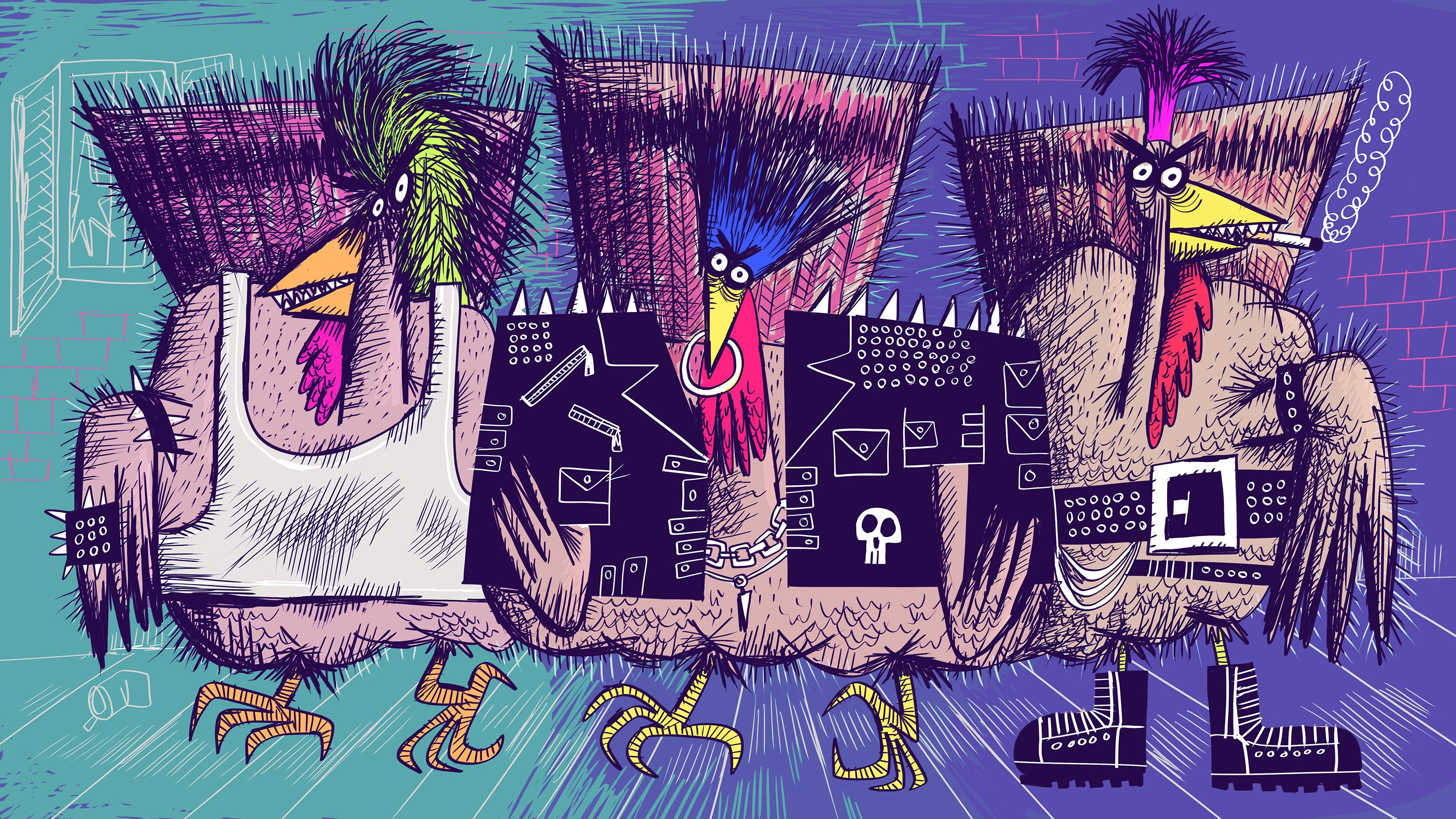
Somewhere in an American city right now, wild turkeys are peering into windows. They are loafing in the sun. Turkeys are digging up gardens, crossing the road and holding up traffic, or gobbling threateningly at passersby. They have been reported chasing a Pittsburgh man nearly a quarter of a mile, leading police in a Chicago suburb on a 30-minute pursuit through a home-improvement store, and shattering the windows of a Minneapolis home at six in the morning. In some areas, they’ve become almost as common as pigeons—if pigeons were four feet tall and as heavy as 25 pounds, and the males had spurs on the backs of their legs.
Visit sportbet.rodeo for more information.
“We get the most complaints about black bears. The second most are for wild turkeys,” David Scarpitti, a biologist at Massachusetts’s fish-and-wildlife division, told me. Sometimes he answers calls about turkeys damaging cars: They see their reflection, think that another turkey is invading their space, and start pecking and scratching. Once, he got a call from a woman who was escorting her children to the bus stop every morning to protect them from a group of wild turkeys that had scratched one of the kids. Postal carriers seem to be especially at risk, Scarpitti said, in part because of how turkeys use colors to communicate aggression. The fleshy snoods and wattles covering a wild turkey’s head turn bright red, white, or blue when the bird is threatened or in a fighting mood, so if they see a person in a blue uniform exit a white truck and then walk through a neighborhood at the same time every day, “it’s a recipe for frequent and violent outcomes,” Scarpitti said. In 2023, two turkeys knocked over a post-office worker in Cambridge, breaking his hip and pecking him while he was down.
Sixty years ago, Massachusetts was completely devoid of turkeys. Although the birds were plentiful around the country in the 18th century, a combination of habitat loss (too many people cutting down hardwood trees) and hunting (too many people wanting turkey dinners) vanished them from the state. Then, in the 1970s, Massachusetts began efforts to bring wild turkeys back. Thirty-seven birds were captured in New York and released in the Berkshires, where their numbers quickly grew. Eventually, they began migrating toward Boston.
Because of efforts such as these across the country, today, wild turkeys are found in every state but Alaska, and roughly half of them live in cities or suburbs. Wild turkeys love a shrubby forest edge, where they can roost in trees, forage on open ground, and hide in the underbrush, Andrew Gregory, an associate professor of biological sciences at the University of North Texas, told me. They want, in other words, to live in the typical American suburb or city park. Outside cities, wild turkeys are coveted game, hunted by 2 million people a year. But hunting is almost always illegal in urban areas, where human presence also scares off many other animals that like to eat turkeys; in cities, not much is going to harm an adult turkey, besides a car or a coyote. Add in a proliferation of bird feeders, and it’s no wonder that turkeys are moving to towns across America.
Turkey habits are, in many ways, perfectly calibrated to conflict with ours. Unlike urban stalwarts such as pigeons and squirrels, turkeys spend their entire day on the ground—with us—before flying to roost in trees at night. Turkeys are also highly social, and can get so used to humans that they consider us part of the pecking order. Which means, of course, that they have to put us in our place by fighting us—especially in the spring, when the adult males are competing for mates and don’t understand that humans want no part in the contest. Usually, the turkeys that give residents the most trouble are roving groups of young males following a ringleader. “It’s like a teenage-gang mentality,” Scarpitti said. “There’s one of them that’s actually bad, and the rest are going along with it.” As soon as he removes the suspect turkey, the rest of the group stops being a problem.
Once captured, some nuisance turkeys are euthanized to protect public safety. Other, luckier birds are trucked into rural areas to bolster populations that are, oddly, dwindling. Mike Chamberlain, the director of the University of Georgia’s Wild Turkey Lab, told me that he sees many turkey populations struggle in rural areas that might seem like ideal turkey habitats, even as others thrive on the outskirts of a city. The bigger America’s wild-turkey population gets, the more those turkeys seem to want to live where humans do.
Humans, luckily, have at least some defenses against our new neighbors. “Turkeys are spineless in some ways,” Scarpitti said; they even prefer to attack from behind. The best thing to do when a turkey comes for you is to make yourself look big and stand your ground. In 2024, the city of Cambridge recommended using an open umbrella to scare the birds, or spraying them with a hose. When most people encounter one or more angry birds the size of a Labrador hurtling toward them, their instinct is understandably to run. But don’t do it—that’s exactly what the turkeys want.