Terror at 10,000 Meters: What a Bumpy Flight in Argentina Taught Me About Deregulation
· Reason
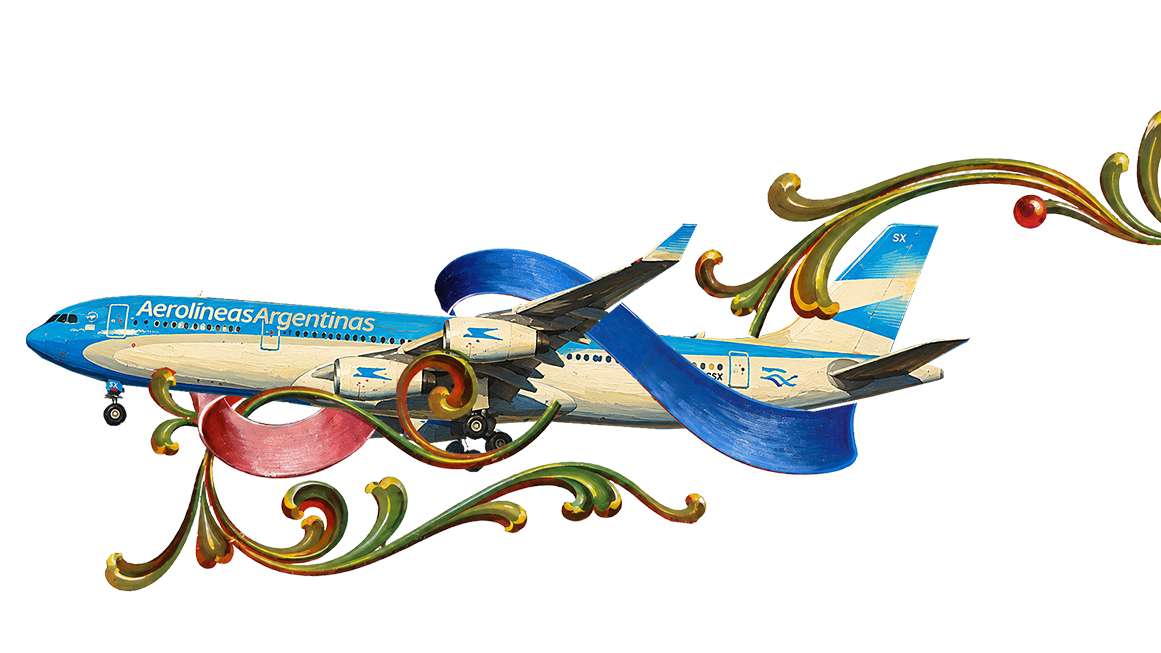
The December 2026 issue of Reason explores Argentine President Javier Milei's accomplishments and what is yet to be done.
Visit bettingx.club for more information.
ReasonEven before we aborted our first attempted landing in the southern mountain town, I knew our flight was in trouble. High winds had been tossing our plane around like a fluttering leaf. Up and down the cabin, passengers were vomiting into the aisles.
To my left, one of my travel companions was whispering prayers to himself at an increasingly frantic pace. In the middle seat, I was thumbing through rosary beads as fast as my trembling fingers would allow. To my right, my other travel companion had a more stoic reaction. "The one time my domestic flight in Argentina leaves on time," he said, shaking his head.
The point of the trip was to take in the beauty of Bariloche, a popular lakeside tourist destination nestled in the Patagonian Andes along the Chilean border. Recent deregulation of Argentina's domestic airline market ensured it was practical and affordable to fly there from Buenos Aires, where we'd been staying since we'd arrived in the country. Weather permitting, we'd even go skiing.
Unfortunately, the weather wasn't even permitting us to land.
I am not generally a nervous flyer. The rational part of my brain reminds me of how safe air travel is in the United States, and that's usually enough to calm the reptilian jitters I feel during normal levels of turbulence. But I was not in the United States, and these were not normal levels of turbulence. Worse still, the airline we'd voluntarily opted to fly on was a budget carrier whose ability to offer our bumpy flight was made possible by the government's liberalization of the industry. For the entirety of my professional career, I had been cheering on the cause of deregulation. Now, here I was praying that a cut-rate profit-seeking carrier would keep my fellow passengers and me safe during exceptionally challenging flight conditions.
With every bounce and dip, I became more convinced that I would realize my biggest fear of dying an ironic death.
For decades, Argentina's aviation industry had been dominated by the state-owned and state-protected national carrier Aerolíneas Argentinas. The airline began life under President Juan Perón in 1950. For decades, it cruised along as an overstaffed, monopoly-protected enterprise under a variety of civilian and military regimes. In 1990, the government attempted to improve the state's balance sheet by privatizing the airline. But the carrier still suffered year after year of losses, despite continued state protection from competitors.
Renationalization in 2008 did not improve Aerolíneas Argentinas' financial situation. Instead, it made the government's fiscal situation worse. State subsidies to the renationalized airline totaled $8 billion by 2021. The state-owned carrier also developed a reputation for unreliability. While official on-time rates remained high, many travelers to Argentina are familiar with the national carrier's drastic changes to departure times, and even changes to which airport a flight was leaving from.
The privileges Aerolíneas Argentinas enjoyed in Argentina came at the cost of competing airlines and passengers generally. Between 2019 and 2022, 17 airlines ceased operations in the country. Companies such as LATAM Airlines, which tried to compete with Aerolíneas Argentinas, left in large part due to government restrictions and union conflicts. Prices were high and service quality was low.
When Javier Milei won the presidency, the airline was identified as a prime candidate for privatization.
That has not happened. But Milei's deregulation of the nation's airline industry does appear to have been beneficial for Aerolíneas Argentinas and the flying public as a whole. The airline slashed unprofitable routes and trimmed staff. In 2025, it posted its first operating profit since the 2008 nationalization.
Milei's "open skies" policy, which liberalized prices and allowed more foreign carriers to offer service between Argentine cities, saw the number of flights offered rise. In 2025, a record 50.6 million passengers flew to, from, and within Argentina.
My plane eventually landed safely, but we then had to wait an hour for our bags to be unloaded, giving me time to reflect on the policy implications of my traumatic experience. Without the lower prices and wider availability of flights created by deregulation, perhaps I would have stayed on the ground and avoided the terrifying flight altogether? Or maybe, in a more statist world, I would have paid more to a state monopoly for the same near-death experience?
The rosary that remained clutched in my still-trembling hands suggested a third possibility. Perhaps there was no policy takeaway here: Perhaps weather is just weather, and our prayers are heard under a variety of regulatory regimes.
We opted to fly a competing airline on our departure from Bariloche. I reasoned that it would be at least as safe as the carrier we flew in on. God's grace is infinite. Unlike the Argentine government, He could afford to protect more than one airline.
The post Terror at 10,000 Meters: What a Bumpy Flight in Argentina Taught Me About Deregulation appeared first on Reason Magazine.